Healthy Helmet Head
Living in Colorado means spending a lot of time in helmets and hats. Whether you’re skiing, cycling or climbing, helmets are essential for safety. They also create a perfect environment for several scalp issues: excessive oiliness and dryness, irritation, buildup, general imbalances in the scalp biome, and even hair shedding.
If you’re an outdoor athlete or weekend adventurer, caring for your scalp is just as important as caring for the rest of your skin. Here’s what you should know.

1. Helmets & Hair Loss
Helmets don’t typically cause hair loss, but they can contribute to inflammation, clogged follicles, and excess friction on already-vulnerable follicles.
When a helmet traps heat and sweat, and rubs against the scalp for long periods, the scalp can shift out of balance. And, for anyone with early-stage androgenic alopecia (genetic hair loss) or naturally fragile follicles, this combination may accelerate shedding, especially around the front hairline and crown.
What helps:
Cleanse the scalp regularly with a circulation-promoting shampoo
Reduce inflammation through soothing and pH-correcting scalp treatments
Strengthen follicles with peptides and growth-supporting nutrients
Get a professional scalp analysis to detect early changes before major shedding begins
2. Seasonal Dryness
Dry winter air, cold winds, and high elevation already stress the skin barrier. Helmets can amplify the problem. When you add sweat and friction under a helmet, the scalp can become flaky, tight or itchy, dehydrated, more prone to micro-inflammation, imbalanced and oily. A compromised barrier also makes follicles more vulnerable to shedding and slows healthy regrowth.
Support scalp hydration with:
Humectants (like hyaluronic acid) and soothing botanicals
Regular liquid exfoliation to remove dead skin without stripping oils
Nutrient-focused scalp treatments paired with low level (red) light therapy
Fish oil and collagen supplements
Drinking plenty of water
Avoid extra-hot water on your hair and scalp
3. Oily Overgrowth
Your scalp biome is a delicate ecosystem of bacteria, yeast, and natural oils. Helmets create a warm, moist environment where certain microbes can overgrow. These symptoms are ongoing scalp odor, oily roots that appear within hours, itching and redness/inflammation that affects the follicle bulb, and scaly, thick skin flakes: all signs of seborrheic dermatitis (bacterial overgrowth). It’s important to have this condition confirmed through a scalp analysis before treating it on your own, as it is often confused with other forms of dandruff. Consistent disturbances of the scalp biome reduce it’s resilience, keeping you stuck in a cycle of irritation and shedding.
Restore your scalp’s biome balance by:
Using a biome-friendly, inflammation-reducing scalp cleanser (Nizoral (ketoconazole) or T/sal (salicylic acid) are affordable options but tend to dry out the rest of your hair). You can follow these shampoos with a nutrient-rich, moisturizing shampoo and conditioner, or opt for a higher quality scalp balancing system.
Avoiding overly harsh or stripping shampoos
Incorporating clinical-grade low level light therapy to reduce inflammation
Scalp restoration treatments- I offer these in single sessions and 12 packs
Dry your hair completely, especially at the scalp
4. Adventure-Induced Build-Up
Dirt, skin cells, and sweat trapped beneath your helmet creates ideal conditions for follicle congestion, scalp acne, seborrheic dermatitis flare-ups, and inflammation. This buildup and inflammation can block the follicle openings, making it harder for healthy hair to grow.
Your scalp will benefit from:
Gentle weekly scalp treatments
A clarifying shampoo every 1–2 weeks
Post-adventure rinses (even water alone helps if you’re in a hurry)
When to Seek Professional Scalp Care
If you frequently wear a helmet and you’re noticing:
Flaking or itchiness
Redness or tenderness
Oily buildup
Repeat scalp breakouts or flares (acne, skin plaques, red patches)
Slow hair regrowth and/or increased hair shedding
Visible areas of thinning (can see scalp where you previously couldn’t)
…it’s time for a scalp consultation and analysis.
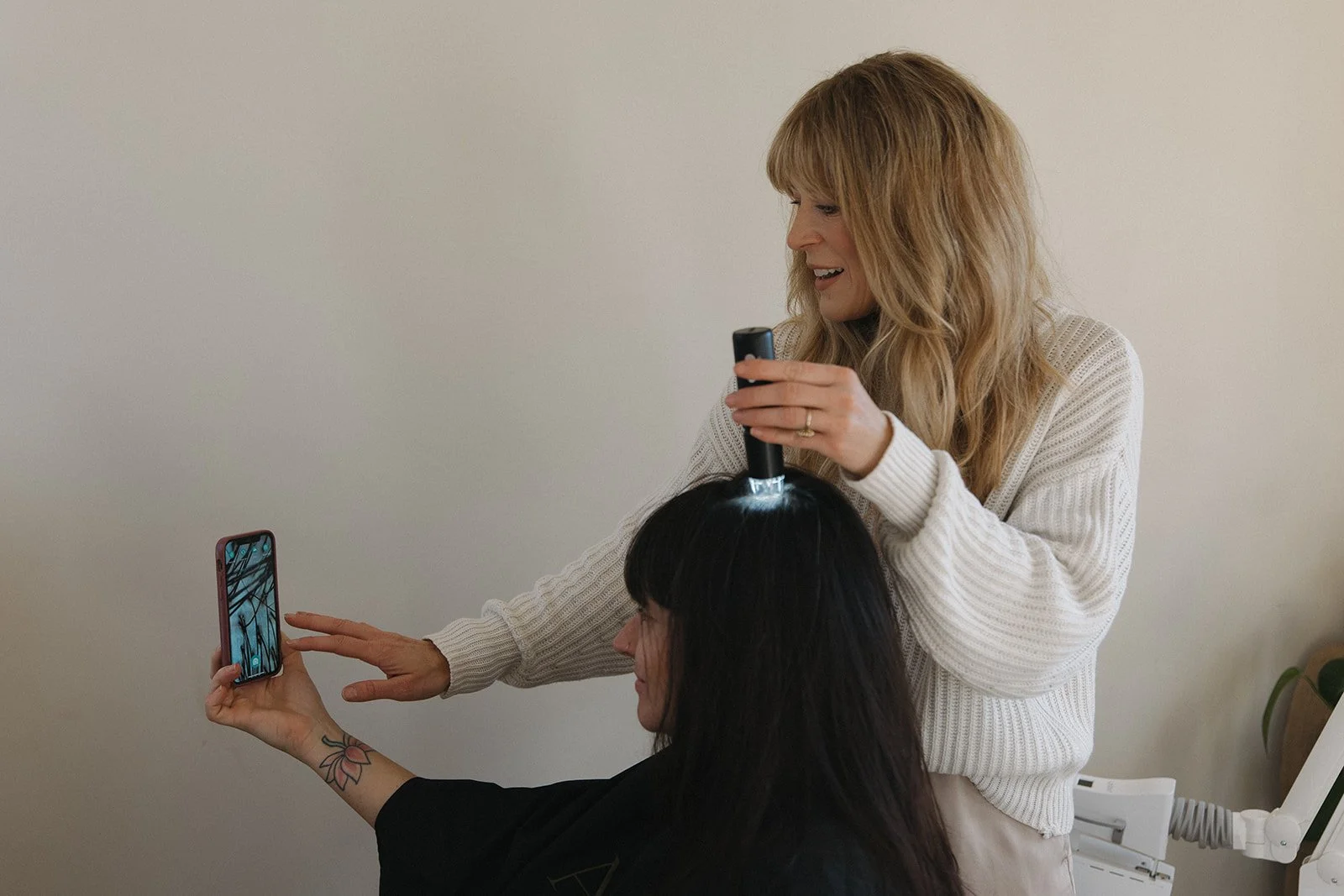
With the right products and treatments, we can address inflammation, restore a healthy scalp biome, improve circulation, and support stronger hair growth over time. If you’d like personalized guidance, I offer in-depth consultations and scalp analyses to help you understand exactly what your scalp needs.